


Keeping traffic local, from the start
The gestation of LINX began when pioneering ISPs (Demon Internet, PIPEX and UKnet, along with UKERNA, the UK academic network) started linking their UK networks together to save the cost and time delay involved in routing data across the Atlantic to US Internet exchanges. This was a painful process, and when BT indicated a willingness to join in, the idea of establishing LINX was born.
Keith Mitchell, then chief technical officer of PIPEX, initiated a meeting to discuss the creation of a London-based Internet exchange. PIPEX provided the LINX founders with a Cisco Catalyst 1200 switch with eight 10-megabit ports and rack space was leased at a virtually empty data centre operated by Telehouse International Corporation of Europe Ltd at Coriander Avenue in London’s Docklands.
The solution was to form a company limited by guarantee. The company was formed in 1995 and a board of five non-executive directors was elected, with Keith Mitchell as the initial chairman. From the beginning it was agreed that LINX would be a not-for-profit organisation run for the benefit of members and governed by them collectively, a practice which continues to this day.
LINX in the 21st century
2000
Membership reaches 100 from 16 countries.
2001
LINX amends its corporate structure to make the post of chairman non-executive and appoints its first chief executive officer, John Souter.
2002
LINX becomes the first exchange to introduce 10G Ethernet operation, using equipment from Foundry Networks.
2003
LINX from Anywhere launches, letting smaller ISPs obtain a secure, virtual presence on the exchange without their own installation in London.
2004
Four new points of presence open, all in the Docklands area of London.
2005
LINX honoured in the IWF campaign against Internet child abuse.
2006
Membership reaches 200, and LINX co-hosts the first European Peering Forum.
2007
The first Conspicuous Contribution to LINX Award is presented to Nigel Titley.
2008
Three new PoPs open in the City of London, North Acton and Slough, adding Interxion and Equinix to the existing Telehouse and Telecity relationships.
2011
The primary London LAN is redesigned and switched to a new vendor, working with Juniper Networks on a VPLS-based design.
2012
ConneXions launches and the first UK local exchange opens in Manchester. LINX tops 1,000 connected member ports, and becomes the first IXP in the world to use Juniper PTX switching gear and MX routers.
2013
LINX launches its second UK local exchange in Scotland.
2014
LINX NoVA opens as the first overseas regional exchange, and LINX becomes the first IXP in the world awarded Open-IX certification. A third UK exchange establishes in Cardiff, and LINX hosts RIPE69 in London for its 20th anniversary.
2015
John Souter wins the ISPA Lifetime Achievement Award, the first member conference outside England since 2001 is held in Cardiff, and Murray Steele is ratified as LINX Chairman.

A record of firsts
In summer 1996 LINX became the first Internet exchange in the world to deploy a 100-megabit switch, a Cisco Catalyst 5000. In January 1999 it pioneered the implementation of a Metropolitan Area Network running over gigabit Ethernet connections.
LINX continues to develop industry-leading initiatives. In 2000 a training manager was appointed to introduce an accredited training programme for Internet engineers and technicians.
As the Internet grew in popularity, legislators and law enforcement agencies inevitably decided it must be regulated. LINX increasingly found itself taking on non-core activities, such as providing expert advice on behalf of our members, and therefore the whole industry, to a wide range of official agencies.
Working for the good of the internet
In 1999 LINX appointed its first full time regulation officer in Roland Perry to advise organisations such as the Home Office Internet Task Force, the National Hi-Tech Crime Unit, the Department of Trade and Industry and relevant departments of the EU Commission. In 2003 Roland was succeeded by Malcolm Hutty when Roland left to form his own advisory group.
LINX also actively and financially supports the Internet Watch Foundation which, since 1996, has worked to eradicate child abuse images from the UK Internet. Initial funding from LINX was instrumental in enabling the IWF to launch and the decision to create the IWF and define its charter was taken at a LINX member meeting in Heathrow.
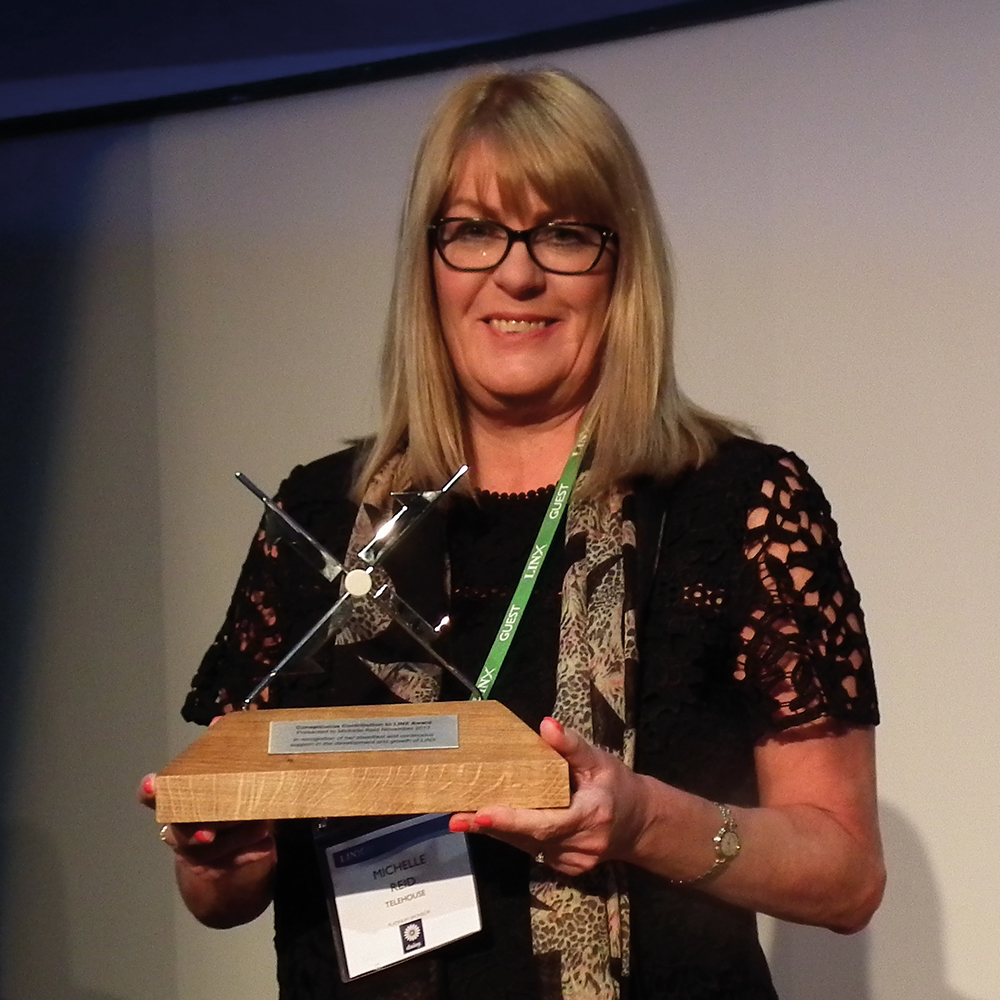
The LINX Award
The LINX Conspicuous Contribution Award is a prize presented to an individual who has shown steadfast and continuous support in the development and growth of LINX.
First presented in 2006, the LINX Award has so far been given to seven recipients: Nigel Titley, Dr Richard Clayton, Clive Feather, NIX.CZ and CZ.NIC for the BIRD route server project, Raza Rizvi, Grahame Davies for his service to LINX as Chairman, and most recently Michelle Reid of Telehouse.
At the landmark LINX100 meeting in February 2018, five of the award winners were present, with fellow recipients Ondrej Filip of NIX.CZ and CZ.NIC and Dr Richard Clayton sending messages of gratitude.
Many thanks to Nigel Titley, a former member of the original LINX Board, for writing the original version of this history, which has since been amended and extended.